


EV Charging Cables
NINGBO E-CHARGER TECHNOLOGY CO, LTD is a professional factory specializing in the production of new energy charging equipment. Our factory is located in Fenghua District, Ningbo City, Zhejiang Province, specializing in the production of new energy vehicle charging guns, with 6 years of professional experience!
Why Choose Us?
Quality Products
We provide reliable and high-quality new energy charging equipment, and our products are durable and efficient.
Innovation
We have invested heavily in research and development, which has enabled us to stay at the forefront of emerging technologies and trends. This means we can provide innovative products to meet the constantly changing needs of our customers.
Rich Experience
We have 21 years of design experience and a professional design team that provides 3d renderings, as well as multiple invention patents.
Reliable Service
Our team is committed to providing reliable and consistent service, ensuring that you receive high-quality products and customer support from us every time.
-
EV Power Cable
Product weight: 5KG. Input: 220V. Output: 220V AC 32A. Rated power: 7kw
-
EV Home Charging Cable
Protection grade: gun head IP67. Operating temperature: -30℃~+50℃. Operating humidity:5%-95%
-
EV Fast Charging Cable
Input: 220V. Output: 220V AC 32A. Rated power: 7kw. Protection grade: gun head IP67
-
EV Dc Charging Cable
Insulation resistance: >500MQ (DC500V). Protection grade: gun head IP67. Operating temperature:
-
EV Charging Station Cable
Product weight: 5KG. Input: 220V. Output: 220V AC 32A. Rated power: 7kw
-
Electric Vehicle Charging Adapters
Voltage: 250V AC. Protection grade: gun head IP67. Product weight: 0.7KG.
-
Electric Car Charging Wire
Output: 220V AC 32A. Rated power: 7kw. Protection grade: gun head IP67
-
Cable for EV Charger
Operating temperature: -30℃~+50℃. Operating humidity:5%-95%. Cable:3*6 mm²
-
Cable for Electric Car Charger
Input: 220V. Output: 220V AC 32A. Rated power: 7kw. Protection grade: gun head IP67


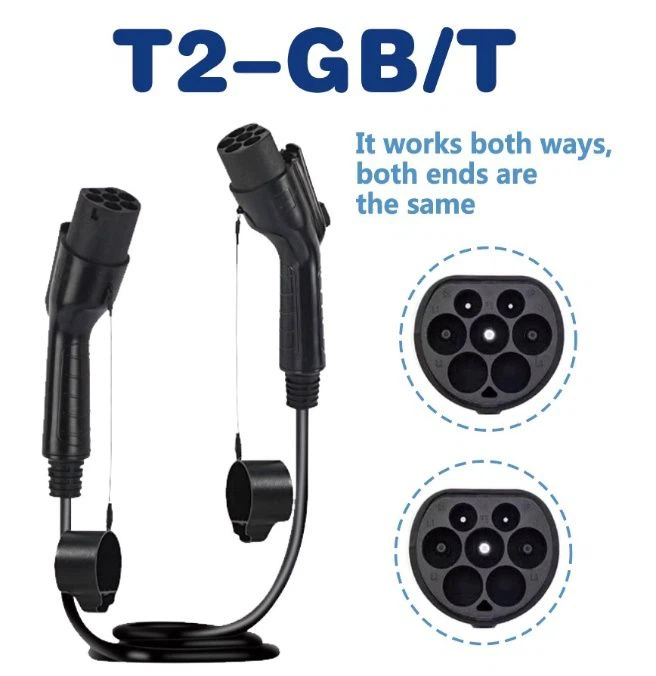
EV (Electric Vehicle) charging cables are cables used to connect an electric vehicle to a charging station or power source. These cables are specifically designed for EV charging and are available in various types and lengths to suit different vehicles and charging requirements. They are typically made of high-quality materials and feature safety mechanisms, such as thermal sensors and automatic circuit breakers, to prevent overcharging and ensure safe, efficient charging. EV charging cables may also come with additional features, such as LED lights to indicate the charging status and durability to withstand harsh weather conditions.
Convenience: With EV charging cables, EV owners no longer have to visit charging stations or take public transport to essential destinations. They can charge their EVs anywhere and anytime they desire.
Cost-effective: Buying an EV charging cable is a one-time investment, and it can save EV owners the recurring expenses of public charging stations.
Safe and secure: EV charging cables come equipped with safety features that prevent overcharging, short-circuiting, or any other damage that could cause harm to the EV.
Fast charging: EV charging cables come with a range of charging rates, allowing users to choose an optimal rate that is appropriate for their EV.
Environmentally friendly: EV charging cables reduce carbon emissions as the energy consumed is from renewable and clean energy sources, which minimizes the carbon footprint of transportation.
Flexibility: EV charging cables can charge multiple types of electric vehicles with different charging requirements, making it ideal for people who own multiple EVs.
Accessibility: Installing EV charging cables in homes or businesses provide easier accessibility for the disabled, elderly, or people who live in remote areas and are unable to access public charging stations.
EV Charging Cable Types for Electric Cars
EV Charging Cable Type 1 Plug
The type 1 plug is a single-phase plug which allows for charging power levels of up to 7.4 kW (230 V, 32 A). The standard is mainly used in car models from the Asian region, and is rare in Europe, which is why there are not many public type 1 charging stations.
EV Charging Cable Type 2 Plug
The triple-phase plug is mainly used in Europe. In private areas, charging power levels of up to 22 kW are common, while charging power levels of up to 43 kW (400 V, 63 A, AC) can be used only at public evcharging stations. Most public charging stations are equipped with a type 2 socket. All mode 3 charging cables can be used with this, and electric cars can be charged with both type 1 and type 2 plugs. All mode 3 cables on the sides of charging stations have so-called Mennekes plugs (type 2).
Combination Plugs (combined Chargingsystem, Or CCS)
The CCS plug is an enhanced version of the type 2 plug, with two additional power contacts for the purposes of quick charging, and supports AC and DC charging power levels (alternating and direct current charging power levels) of up to 170 kW. In practice, the value is usually around 50 kW.
How Do I Choose a Charging EV Charging Cables?
If you need a charging EV charging cables, then you will want one with a Type 2 connector. The process for selecting a public cable goes as follows:
Pick The Right Connector For Your Car
Check whether your car is Type 1 or Type 2 using our car guides. You will always want a universal Type 2 charger plug connector.
Choose An Appropriate Length Cable
We recommend 7.5m as a good compromise between ease of use and ease of storage, but you can get shorter cables (easier to store), or longer cables (offer more reach).
Pick A Suitable Current Rating For Your Car
You at least want one that matches your max AC charge rate (16A = ~3.6kW, 32A = ~7kW for single phase), but getting a higher rated cable means you would be able to charge another car at the higher rate, so may be more future proofed.
All EV charging cables are not the same. There are several significant differences between high-quality and low-quality cables. Higher-quality cables are more durable, are made with better materials and stronger protections against the strains expected from everyday use.
Quality cables are also better suited for extreme conditions. One thing many cable owners will have noticed is that the cable becomes stiff and unwieldy when the temperature drops. Higher-end cables are designed to remain flexible even in severe cold, making them easier to use and stow away.
Water getting on to the terminals and into the vehicle inlet is another common problem that may cause corrosion and a poor connection over time. One way to help avoid this issue is to select a cable with a cap that doesn't collect water and dirt when the cable is in use.
High-end cables usually also have a more ergonomic design and a better grip. For something you may use every day, usability is worth considering.

Keep Your Ev Charging Cables Clean
Regularly cleaning your EV charging cables is an important maintenance step that often goes unnoticed. Dust, debris, and even moisture can accumulate around the connectors over time, hindering the charging efficiency. To clean your cable, use a soft brush or cloth to gently wipe away any dirt or grime. Avoid using water or harsh chemicals that could potentially damage the cable's insulation.
Protect Your Cable From Extreme Weather Conditions
Extreme weather conditions can have a detrimental impact on the performance and durability of your charging cable. Direct exposure to intense sunlight, heavy rain, or freezing temperatures can cause wear and tear. Whenever possible, park your vehicle in a covered area or use a cable cover to shield the cable from harsh weather elements.
Avoid Frequent Over-bending Of The Charging Cable
Continuously bending the charging cable at sharp angles or repeatedly coiling it tightly can lead to internal damage. Over time, this can weaken the conductors within the cable, resulting in reduced charging efficiency or even a complete malfunction. It is advisable to use cable management accessories such as cable holders or hooks to keep the cable organized and prevent excessive bending.
Use The Correct Charging Plug And Outlet
Using the correct charging plug and outlet is crucial for both safety and optimal charging performance. Ensure that the plug matches the charging port on your EV to prevent any compatibility issues. Additionally, the outlet you connect your charger to should have the appropriate voltage and amperage to accommodate your EV's charging requirements. Using mismatched equipment may lead to overheating, damage, or even accidents.
Perform Regular Cable Inspections
Regularly inspecting your charging cable is an excellent way to identify any potential issues before they escalate. Look for any signs of wear, fraying, or damage to the insulation. If you notice any visible defects or exposed wires, it is crucial to replace the cable immediately. Ignoring such issues can be dangerous and may result in electric shocks or fires.
Clean Your Ev Charging Cables Regularly To Remove Dust And Debris
● Protect your cable from extreme weather conditions using covers or by parking in a covered area.
● Avoid over-bending the cable to prevent internal damage.
●Make sure to use the correct charging plug and outlet for safety and efficiency.
● Perform regular inspections to identify any signs of wear or damage and replace the cable if necessary.
What Is the Best Cable for EV Charging Cables?
Most people will find it useful to have two different types of charging cable: one with a Type 2 or 1 connector for use with a wall box charger, and the other with a three-pin plug that can be used with a domestic plug socket. The best cable for EV charging depends on the type of charging station being used and the specific electric vehicle being charged. The cable used should also be compatible with the electric vehicle's charging port. It's important to ensure that the cable is rated for the appropriate amperage, voltage, and wattage needed for the charging station and electric vehicle. It is recommended to use high-quality, durable cables that meet safety standards to ensure reliable and safe charging.

Yes, EV charging cables can be bought separately if one doesn't come with your EV. There are many companies and retailers that specialise in selling electric vehicle charging equipment and accessories, including charging cables.
When buying a charging cable separately, ensuring it meets safety and quality standards is crucial. There are a lot of cheap charging cables available online, but it is worth investing in a high-quality cable that is safe and will last.
You should also consider the power rating of the charging cable you buy. For example, some charging cables can only charge at 3.6 kW (16 amps). However, newer electric vehicles can charge at 7.4 kW (32 amps) on a single-phase supply, and some can even charge at 22kW on a three-phase power supply.
As such, you should consider your vehicle's maximum charging speed when buying a charging cable. We recommend purchasing a charging cable capable of charging at 7.4kW or 22kW, which will futureproof you if you ever upgrade your vehicle.
When Will You Need an EV Charging Cables?
It's worth having a spare EV charging cables for a number of reasons. You may have a home charger that has a tethered lead - that is a cable that's permanently attached to the wall box - so it'll be handy to have a lead to keep in the boot of your car so you can charge away from home.
You may also find it more practical to have a charger with a long lead to use at home or work so it can be stretched around other vehicles or obstacles. Aftermarket charging cables come in a range of lengths up to 20 metres.
It's also possible to buy EV charging cables with brightly coloured leads, which could be useful if you're using it across a walkway or in a dimly lit location.
Choose Recyclable: EV Charging Cables
Even the most durable charging EV charging cables must be replaced in the end. When that happens, every component should be fully recycled. Unfortunately, most EV charging cable plugs are water- and impact-proofed through with a process called potting, which involves filling the interior of the plug with plastic, rubber, or resin compound. These compounds make it nearly impossible to separate and recycle the components later. Fortunately, there are cables made without potting and reusable materials that can be completely recycled after use.
FAQ
Q: How long can my EV charging cable be?
Q: How do I protect my EV charging cable?
Q: Do EV chargers need maintenance?
Q: What is the maximum current capacity of an EV cable?
Q: How do you clean EV charging cables?
Q: What is the lifespan of an EV charger?
Q: Can EV charging cables get wet?
Q: What is the green stuff on charging cables?
Q: Can EV charging cables be repaired?
Q: Why should I not charge my EV to 100?
Q: What are EV charging cables?
Q: Are thicker charging cables better?
Q: What EV cables do I need?
Q: What does EV stand for in chargers?
Q: What is the best cable for EV charging?
Q: Do I need my own cable to charge EV?
Q: Do you need your own cable for EV charging?
Q: Do EV chargers come with cable?
Q: How does a home EV charger work?
Q: What is the difference between a Type 1 and Type 2 EV charging cable?
As one of the leading EV charging cables manufacturers and suppliers in China, we warmly welcome you to wholesale high-grade EV charging cables from our factory. All our products are with high quality and competitive price.
EV Power Cable, EV Fast Charging Cable, Cable For Electric Car Charger